
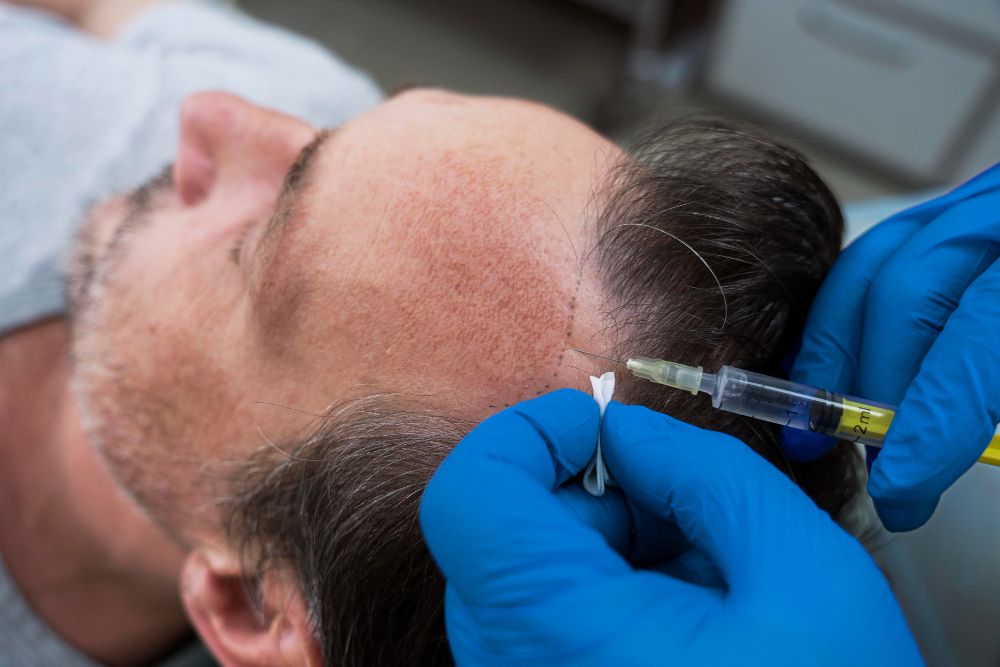
Many people search for safe hair loss treatments that really work. PRP for hair fall is a new option that uses your own blood to help with hair growth. This method, known as platelet-rich plasma for hair loss, is gaining attention for its natural approach. In this blog, you will learn how PRP strengthens hair follicles and what to expect from this treatment.
What Is PRP Therapy?
PRP stands for platelet-rich plasma. It is a part of your blood that has many healing cells called platelets. These platelets help your body repair and grow new tissue. Doctors have used PRP for years to help heal injuries. Now, PRP therapy is also used to treat hair loss. Because PRP uses your own blood, it is considered a safe hair loss treatment for many people.
How Does PRP Work for Hair Fall?
When you lose hair, the hair follicles become weak or damaged. PRP for hair fall aims to make these follicles stronger. First, your blood is drawn and spun in a machine. This separates the platelets from other parts of your blood. Next, the doctor injects the platelet-rich plasma into your scalp. As a result, the platelets release growth factors that help repair and grow hair follicles. Over time, this can lead to thicker and stronger hair.
Benefits of PRP for Hair Loss
Many people choose PRP hair treatment because it offers several benefits. For example, it is a natural method that uses your own blood. In addition, it is less risky than surgery. Here are some key PRP hair treatment benefits:
Who Is a Good Candidate for PRP?
Not everyone is the right fit for PRP therapy. However, many people with early hair loss may benefit. You may be a good candidate if:
On the other hand, people with severe hair loss or certain illnesses may not see the same results. Always talk to a doctor to see if PRP for hair fall is right for you.
The PRP Procedure: Step-by-Step
Knowing what happens during a PRP session can help you feel more at ease. Here is a simple breakdown of the process:
Most sessions take less than an hour. Because the process uses your own blood, the risk of infection is low.
Potential Side Effects and Risks
Although PRP for hair fall is considered safe, there are some possible side effects. Most are mild and go away quickly. For example, you may notice:
Rarely, infection or allergic reaction can occur. However, these risks are lower because your own blood is used. According to the CDC, using sterile tools helps prevent most problems. Always choose a trained medical provider for your PRP hair treatment.
What to Expect: Results and Timeline
After PRP therapy, results take time to appear. Usually, you may see less hair shedding after a few weeks. However, new hair growth often starts after three to six months. For best results, doctors may suggest several PRP sessions spaced a few weeks apart. Over time, your hair may look fuller and feel stronger. According to peer-reviewed journals, results can last for months, but touch-up treatments may be needed.
Tips for Maintaining Healthy Hair After PRP
Even after PRP for hair fall, caring for your hair is important. Here are some tips to help you maintain healthy hair:
With the right care, you can help your hair stay strong and healthy after PRP therapy.